How to Choose Fabric That Won’t Ruin Your First Project
If the rolls of fabric at your local store give you anything but joy, it’s…
If the rolls of fabric at your local store give you anything but joy, it’s probably because they all look wonderful but will all sew differently once you’ve cut them. When you’re just starting out, you may be choosing fabric because of its color and print, but it’s pilling and you can’t get it to hold its shape; or it’s terribly stretchy so you can’t get seams lined up. The type of fabric you use can make or break your experience. Woven cotton fabric is forgiving, presses smoothly, and will show you what you’re doing wrong so you can adjust your technique.
Another thing to do before you commit to purchasing enough fabric to make a garment is to rough-handle the fabric. Gather it into a fist and then let go, and watch to see how fast the wrinkles come out. Hang it from your arm to see whether it will drape or whether it will hold its shape away from your body. These things will give you an idea of what the finished garment will do. A fabric that’s too slippery or too stiff will make tiny discrepancies in pattern-making and sewing look huge. Selecting a fabric that’s willing to work with you helps you feel more secure at the beginning, and it allows you to focus on issues of fit and garments rather than having to adjust for the fabric.
A common error is to disregard the grain line or stretch of a fabric when placing the pattern pieces on it. Most fabrics, even those described as non-stretch, will have a little bit of give in one direction or the other. And if the pieces are not cut the same way, your garment may be twisted or skew when you put it together. So try to keep the grain lines going in the same direction for each pattern piece, and make sure the fabric is lying flat and not under tension when you mark your pattern pieces on it. If it starts to skew, go ahead and start over rather than trying to muscle through and make the pattern piece fit.
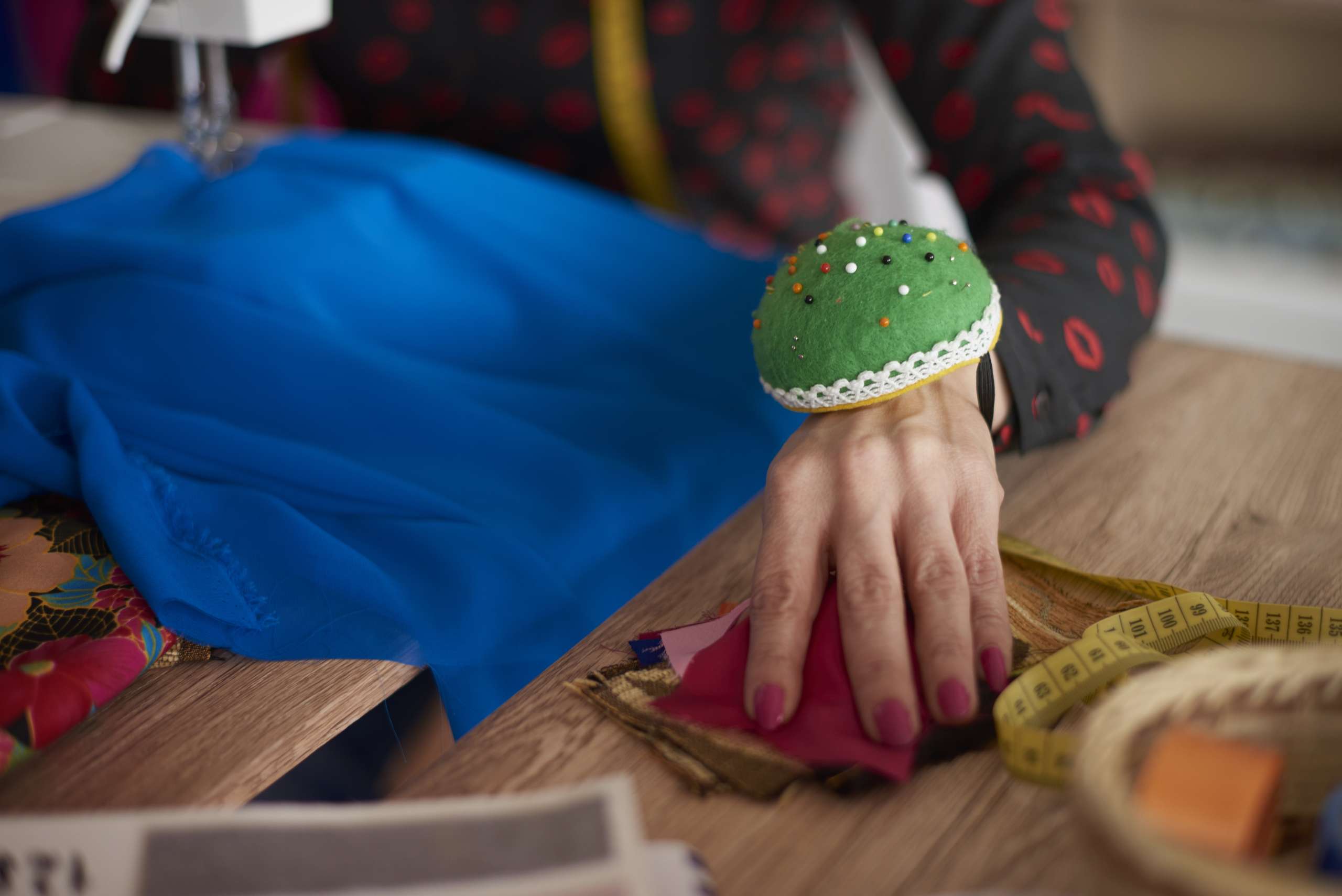
Set your clock for 15 minutes and play around with scraps of fabric, cutting out small bits and sewing them up into tubes, or panels. Iron your sample and observe the results. Do the seams pucker? Is the edge wavy? Gradually you will start to recognize a type of fabric as being likely to perform in a certain way. Having the samples you’ve made is a much better way to refer back to this information than simply trying to remember.
If you’re still not sure, start with a small project. Not a full-blown dress or anything, just a simple top or skirt. It gives you enough framework to get into measuring, cutting and pressing accurately, matching seams, but not so many pieces that you’re overwhelmed. Then you can start picking fabrics based on how they will affect each part of the process instead of making random choices that might sabotage your pattern.